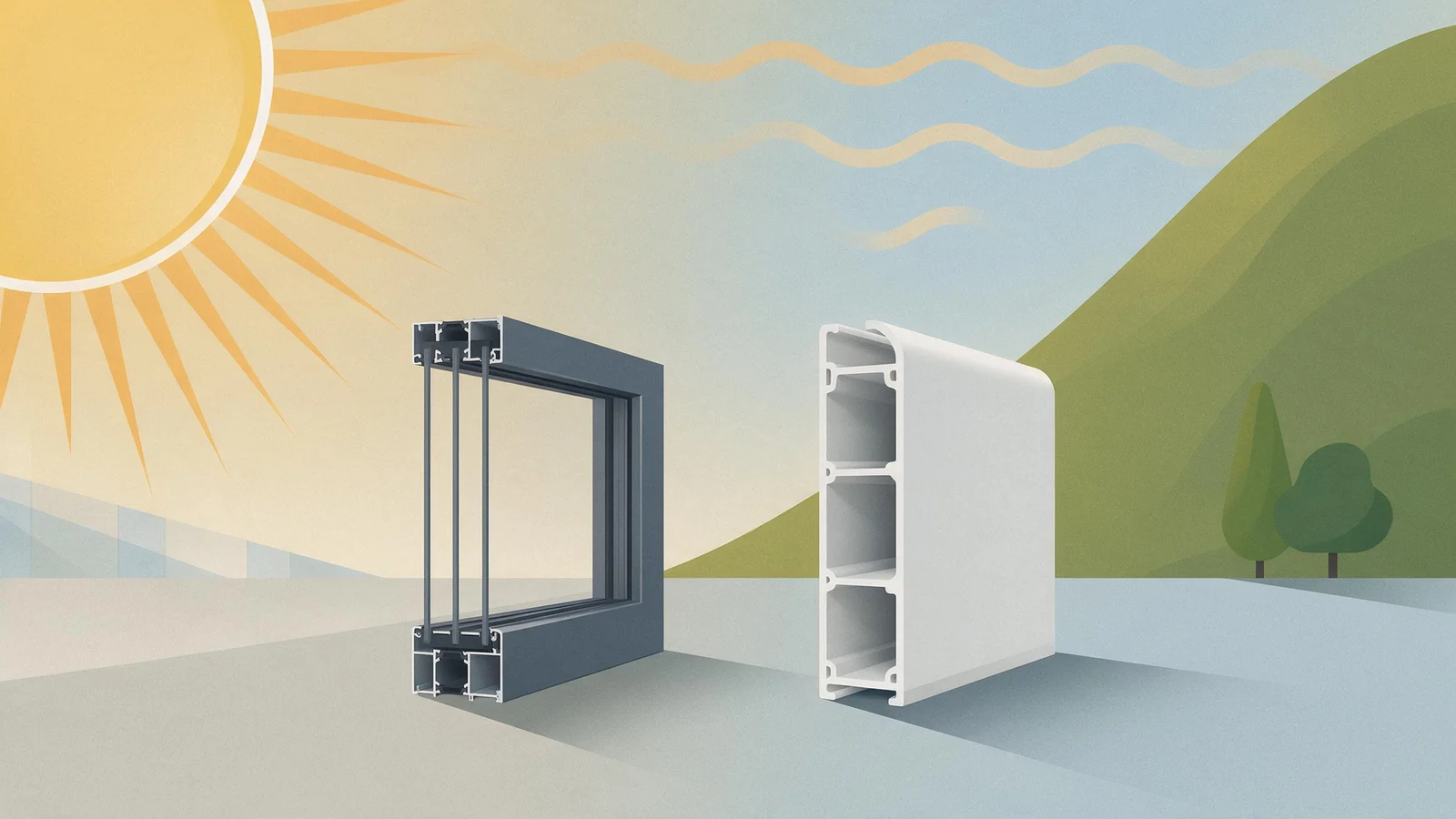
Specifying windows for a hot climate is not the same as specifying them for a mild one. In tropical and subtropical markets, frames face steady heat, high humidity, strong sun and, on the coast, salt-laden air. Importers, wholesalers and project buyers in Africa often ask the same question: aluminium or uPVC windows for hot climates? The honest answer is that both work, but they behave differently, and the right choice depends on the building, the budget and the maintenance reality on site.
Winway has its own door and window factory in Foshan, China, and supplies both aluminium and uPVC windows and doors. This article sets out the practical differences so you can brief your supplier with confidence.
How Heat and Humidity Affect Window Frames
Both aluminium and uPVC are used successfully in hot, humid regions. What matters is how each material is made and installed.
Aluminium is a metal. It does not absorb moisture, so it will not swell, warp or rot in humid air. It holds its shape under strong sun. Because bare aluminium conducts heat, thermally broken profiles are used where insulation matters, and powder coating or anodising protects the surface. For most residential and commercial projects in hot climates, a well-made aluminium frame performs reliably for years.
uPVC is a rigid plastic. It also resists moisture and does not corrode. In hot climates, the quality of the compound matters: a stable formulation keeps the profile from becoming brittle under long UV exposure. uPVC is a good fit for projects where thermal insulation is a priority and the building is not in a severe coastal setting.
Neither material is automatically better. The deciding factors are usually the project location, the size of the openings, the desired sightlines and how the windows will be maintained after handover.
Aluminium or uPVC Windows for Hot Climates: A Side-by-Side View
The table below summarises the practical differences buyers ask about most. It is a general guide, not a substitute for a project specification.
| Consideration | Aluminium | uPVC |
|---|---|---|
| Strength for large openings | High. Suits wide sliding and folding systems. | Good for standard window sizes. |
| Sightlines | Can be made very slim. | Generally wider frames. |
| Thermal insulation | Improved with thermal breaks. | Naturally low conductivity. |
| Humidity and moisture | Does not absorb water. | Does not absorb water. |
| Colour options | Wide, including wood-look finishes. | Usually white, grey or black. |
| Repair approach | Confirm local fabricator support. | Confirm local fabricator support. |
For a hotel or apartment block with large glazed openings, aluminium is often the practical choice because the frame can carry bigger panels. For a low-rise residential project with standard windows, uPVC can be a cost-effective option. The right answer comes from your drawings, not from a general rule.
Which Windows for Tropical Climate Projects?
Tropical climate projects share a few conditions: heavy rain, high humidity, intense sun and, in many cases, coastal salt. Window selection should follow those conditions.
Aluminium windows
Winway supplies casement, sliding and folding aluminium windows. The aluminium windows range includes a vertical folding window and a panoramic folding window, each with a detailed product page. The vertical folding window is engineered with high-strength aluminium and tempered insulated glass, and folds vertically to open completely. It uses a multi-point locking system integrated into the aluminium bi-fold structure. The panoramic folding window is made from high-grade aluminium alloy in a modern minimalist style, with manual operation and colours including sand grey, coffee and champagne gold. All dimensions are customizable to fit your unique opening.
For larger openings, the slim frame aluminium sliding doors use a 2.0mm profile and 8mm Grade-A tempered glass, with professional-grade silent rollers. These are often specified for balcony and terrace connections in hot climates.
uPVC windows and doors
Winway also supplies a uPVC windows and doors range covering casement, sliding and French styles. These are a practical option for projects that want a lower-maintenance plastic frame and do not need the slim sightlines of aluminium.
If your project includes interior or security doors, the solid teak security doors are made from solid teak in a one-piece build, with an A-grade anti-theft rating (manufacturer's rating). They suit humid climates and coastal properties.
Buyer Checklist for Hot-Climate Window Orders
Before you confirm a supplier, work through these points with your team.
- Confirm the frame material and profile system for each opening.
- Ask whether the supplier can match your drawings and opening sizes.
- Confirm the glass build-up for each window type.
- Ask for a sample of the frame finish and colour before production.
- Confirm whether a local fabricator can match the profile if a unit needs repair later.
- Ask what surface finish is specified and how it is expected to perform in your project location.
- Confirm the hardware and locking system for each window type.
- Check the packing method for sea freight to your port.
These questions are not about finding fault. They simply make sure the quotation and the delivered product match what your project needs.
Standards, Samples and Quality Control
Aluminium windows and doors carry CE marking. uPVC windows and doors are supplied to the same factory quality process, but CE marking applies to the aluminium range. Third-party inspection reports and factory audit documentation are available on request for any product line.
Every order goes through documented quality control before shipping. A quality inspection team follows up with spot checks during production, combining computer and manual review. During loading, the logistics team counts the goods again and takes photos and videos. Winway guarantees that the materials used in production are consistent with the approved samples, and custom orders include a pre-production sample approval step before full manufacturing begins.
Samples are free of charge across all product categories, including windows and doors. You only pay the international shipping cost. This lets you check the profile, colour and finish before you commit to a bulk order.
Shipping and Project Support
Winway supports FOB (Foshan or Guangzhou port), CIF and EXW. FOB is the most common choice for buyers who work with their own freight forwarder. CIF is available for buyers who prefer Winway to arrange ocean freight and cargo insurance to the destination port. Door to door is available for some countries.
Sea freight typically takes 15-45 days depending on your destination port. Air freight for samples or urgent small orders arrives in 5-10 business days. Coordinated shipment reaches major African ports including Durban, Mombasa, Lagos and Tema with proper documentation.
Winway's project portfolio includes aluminium window work in Zambia, alongside villas, apartments, hotels, a hospital, a spa and a bar across Zambia, Tanzania, Uganda, Senegal, the Republic of the Congo, Burkina Faso, Kenya and Ethiopia.
For installation, Winway can send architects to guide the construction on site, or send a construction team to carry out the work. As the client, you do not need to provide construction personnel. After-sales support covers installation support, product maintenance, customer support, feedback and complaint handling, and fast-response logistics for replacements. Windows and doors are covered by warranty support plans.
If you are comparing aluminium or uPVC windows for hot climates, send your drawings and opening schedule. Winway will return a detailed quotation within 24 hours. Free design support includes 2-3 design options for your approval, free of charge.